
The Power of a Shared Experience
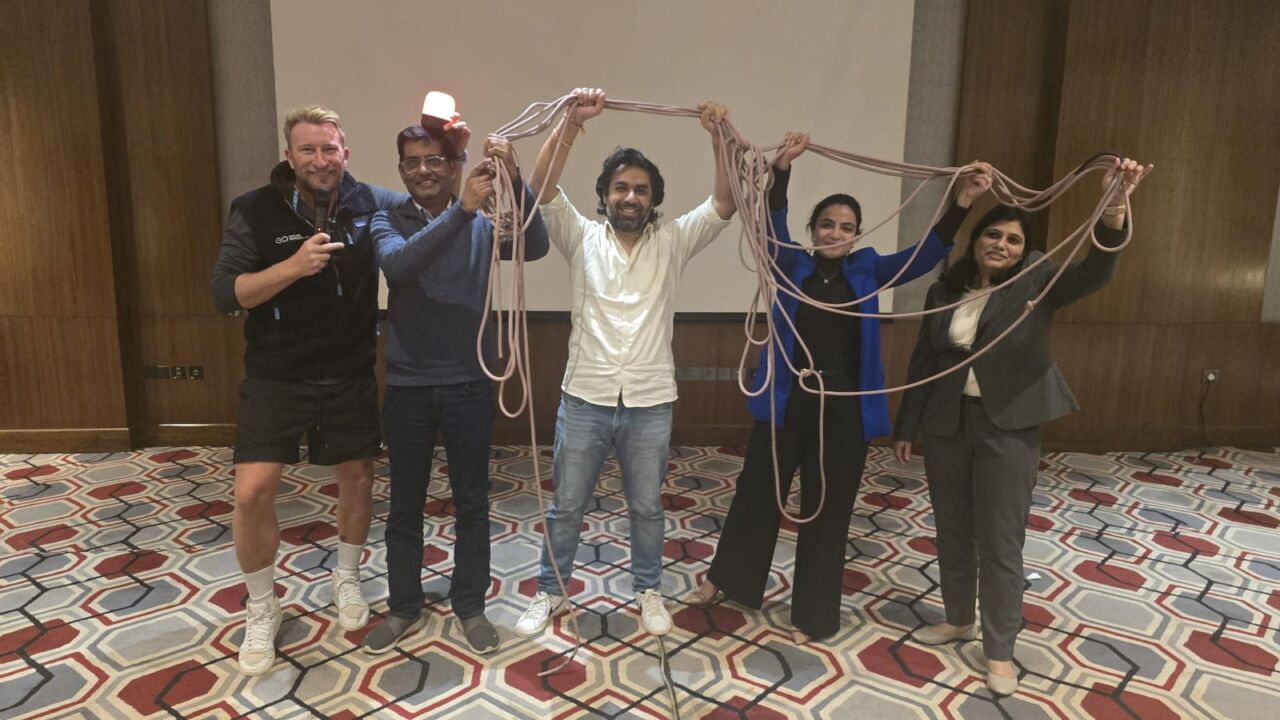
AI can summarise a strategy. It cannot summarise the moment a team realises they’ve all been carrying the same fear and never said so.
That moment happens in a room. Not a screen.
The case for being there
Technology answers questions faster than any human ever could. What it cannot do is create shared experience. It cannot make forty people watch each other struggle, adapt, and come through together. It cannot generate belief. Belief is built, not retrieved.
That’s the gap Explore Performance works in. As AI takes over more of the analytical load, the human load becomes more valuable, not less. Teams don’t need help processing information. They need help processing each other.
What real looks like
Every Explore Performance programme is built from something that actually happened. Into The Unknown is grounded in Grant “Axe” Rawlinson’s own expedition experience, including the first successful row of the Tasman Sea, eleven years and three failed attempts in the making. No simulation software. No stock footage. The pressure in the room is real because the story it’s drawn from was real.
That authenticity is what turns a training day into a lasting reference point. One client, reflecting on a recent Into The Unknown session, put it like this:
“Adam was thought provoking, energising, responsive, and brought psychological insight and Financial Services Industry relevance. The programme created many ‘aha’ moments in my team. Lessons for a lifetime.”
He described the session giving his team a language for something they’d never named: the pull between exploring new ground and exploiting what already works. A day later, six customer teams were still using that language, unprompted, to challenge their own decisions.
Belief travels further than instruction
You can instruct a team on strategy. You can’t instruct them into belief. Belief comes from watching a colleague push past what they thought was their limit, in front of you, with no way to fake it. That’s why the exercises are physical, live, and unscripted. The insight has to be earned in the room before it can be applied outside it.
The same client’s response to Axe captured this exactly:
“Thank you for turning your passion for human-powered exploration into a template for human inspiration and improvement.”
Not a framework. A template built from lived experience, tested on real expeditions, and handed to teams who need to find their own version of the same resolve.
The point AI can’t reach
The more capable the technology gets, the more the differentiator becomes what happens when people are physically together, under pressure, with something genuinely at stake. That’s not a nostalgia argument. It’s a performance one. Teams that have shared a hard, honest, human experience make better decisions together afterwards, because they trust each other more.
Explore Performance builds that experience deliberately. Real expeditions. Real facilitators. Real consequences in the room. No shortcut through a screen replaces it, and that’s exactly the point.